For plant-based product developers, the choice between pea protein and soy protein is one of the most fundamental formulation decisions. Both are complete or near-complete proteins, both are widely available in Thailand and globally, but they differ significantly in functionality, allergen status, taste, and cost. This guide compares the two side by side to help food and beverage manufacturers select the right protein for their next product.
Quick Comparison Table
| Attribute | Pea Protein Isolate | Soy Protein Isolate |
|---|---|---|
| Protein content (dry basis) | 80–90% | 90%+ |
| PDCAAS score | 0.82 (concentrate) – 0.93 (isolate) | 1.00 (complete) |
| Allergen status | Low allergenicity (non–Top 8) | Major allergen (Top 8/9) |
| Solubility (neutral pH) | Low–Medium | Medium–High |
| Gelling strength | Good | Excellent |
| Flavor profile | Earthy, slight beany | Mild, slight beany |
| Typical color | Light beige to cream | Off-white to cream |
| GMO status | Almost always non-GMO | Non-GMO available, GMO common globally |
| Cost (relative) | Higher | Lower |
1. Amino Acid Profile
Soy protein is considered a complete protein with a PDCAAS score of 1.00 — the highest possible. Pea protein isolate scores between 0.82 and 0.93 due to lower methionine content, but blending pea with rice protein or a small amount of methionine-rich sources can close the gap entirely. Pea is naturally rich in BCAAs (branched-chain amino acids), particularly arginine and lysine, making it a favorite for sports nutrition applications.
2. Allergen Considerations
This is where pea protein pulls ahead for the modern free-from market. Soy is one of the “Top 9” major food allergens in the US and EU, requiring mandatory labeling. Pea, in contrast, is generally recognized as low-allergenicity. For brands positioning around “clean label,” “allergen-friendly,” or “school-safe” claims, pea protein is the clear choice despite the higher cost.
3. Functionality in Different Applications
Beverages
Soy isolate offers superior solubility at neutral pH, making it well-suited for ready-to-drink protein shakes and cocoa-based beverages. Pea isolate can be used but often requires acidification or specialty grades such as Clear Pea Protein for translucent beverage applications.
Plant-based Meat
Both proteins are used extensively. Soy provides better texturization and cooking yield in extruded meat analogs, while pea works well when combined with methylcellulose and other binders. Textured Pea Protein (TVP-style) is increasingly popular in premium meat alternatives.
Bakery and Snacks
Pea protein contributes to protein enrichment without the strong soy flavor and works well in high-protein cookies and crackers. Soy remains dominant in soy crisps and puffed extruded snacks due to its excellent extrusion functionality.
4. Which Should You Choose?
- Choose pea protein when: allergen-friendly positioning, clean label appeal, sports nutrition, non-GMO priority, higher price positioning acceptable.
- Choose soy protein when: cost efficiency, superior gelling and solubility, extruded meat analogs, established supply chain preferred.
- Consider blends when: optimizing amino acid completeness, texture, and cost simultaneously.
Sourcing Pea and Soy Protein in Thailand
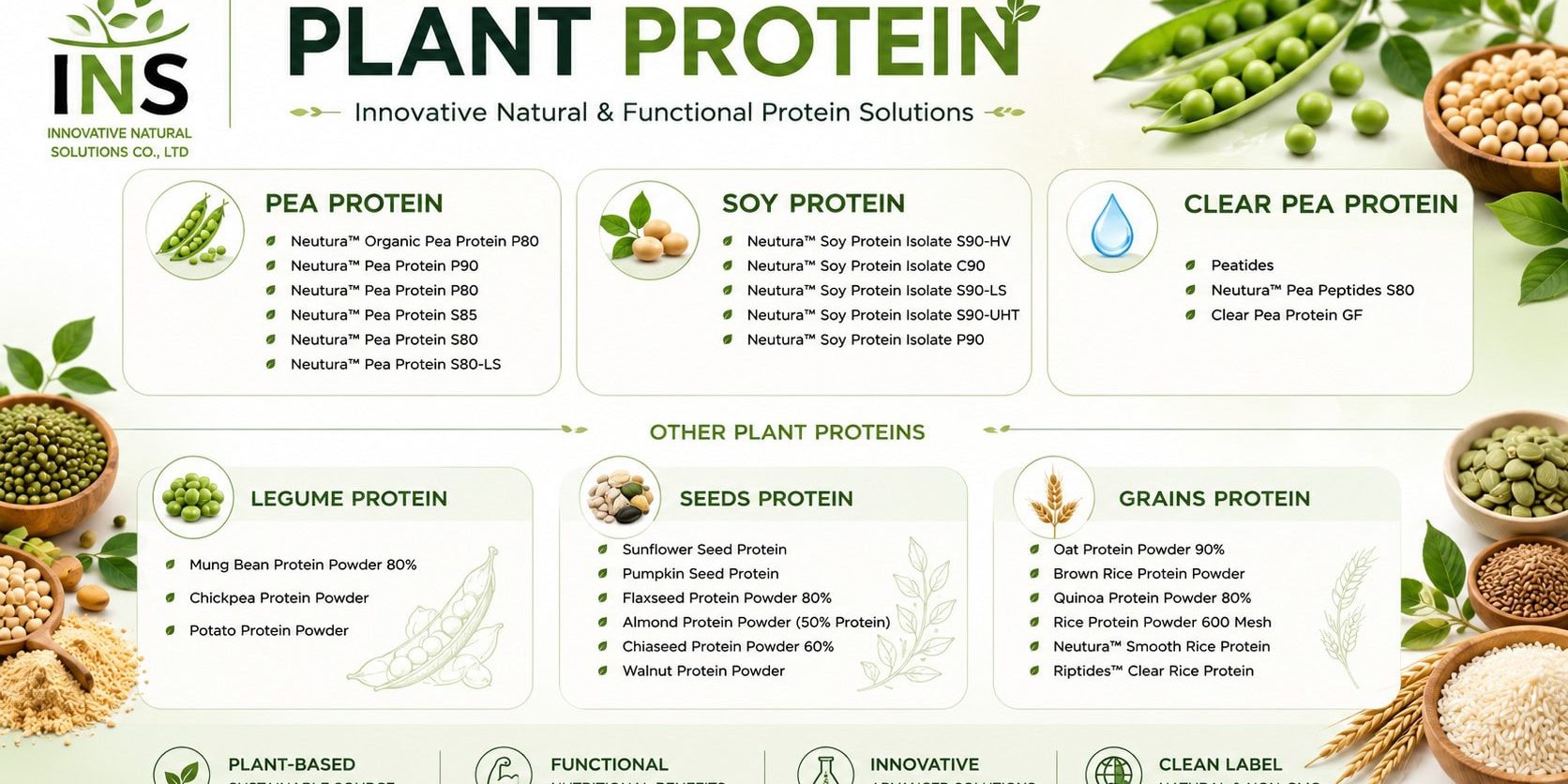
Innovative Natural Solutions (INS) supplies a full range of plant proteins from Thailand, including Pea Protein 80–90%, Clear Pea Protein Drink, Textured Pea Protein, and both regular and non-GMO Soy Protein Isolate (Neutura Soy Protein series). Halal, HACCP, and GMP certifications are available for most SKUs.